

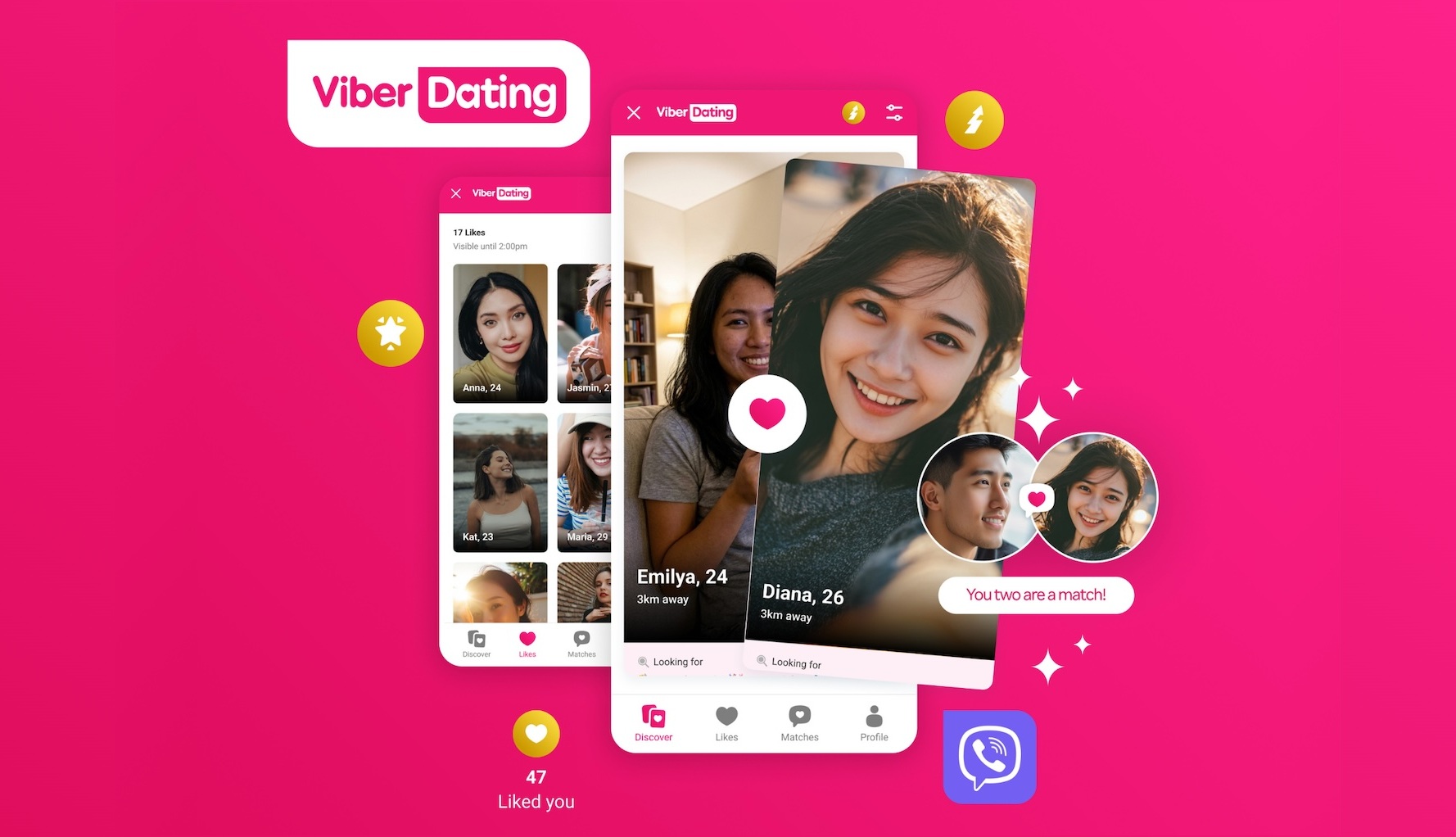
Since launching on Valentine's Day in 2025, Viber Dating has expanded across Southeast Asia and Europe by taking a different approach from standalone dating apps. Because it lives inside the broader Rakuten Viber super app, users never have to leave the platform once they match, eliminating the drop-off that happens when couples migrate to a separate messaging service.
That structure also changes the platform's incentives. Typical dating apps depend on users staying single and subscribed, while Viber has no such conflict. "Users have trusted Rakuten Viber as a communication hub for all aspects of life," said Chief Product Officer Nadav Melnick. "Our responsibility to them and to our brand is higher than that of a standalone dating app."
Safety is central to that responsibility. Fake profiles and catfishing have driven widespread dating burnout, and Rakuten Viber's 2026 study, The State of Modern Dating, found privacy is now the top priority for digital daters. Drawing on its history of secure communication, Viber pairs photo verification with a hybrid of AI and human moderation to vet new accounts, separates dating profiles from regular contacts, and blocks screenshots.
Looking ahead, the platform is evolving its interface with personalized feeds and new ways to discover compatible profiles beyond traditional swiping, building an ecosystem where security, convenience, and genuine human connection coexist.
Read the full story here.
