

.jpg)
What does it take to lead at AI speed?
This is the question asked by Rakuten International COO Adrienne Down Coulson in her Fortune article, “AI is turning workers into superhumans. Their leadership teams haven’t kept up” and as a speaker at the 2026 Fortune COO Summit alongside Instacart Head of Operations Tom Maguire and Fortune Editorial Director Kristin Stoller.
Across industries, AI is accelerating productivity, streamlining workflows, and helping teams accomplish more in less time. Yet despite rapid adoption, many organizations are still struggling to realize the operational transformation that they are expecting.
According to Coulson, the reason may not be completely related to technology adoption: "The front-line gains from AI are real. Faster engineers, automated workflows. Yet full business transformation at most organizations still seems elusive and hard to define. What's preventing it may live higher up in the organization than anyone wants to admit.”
Coulson’s hypothesis that the speed of the AI era is exposing inefficiencies in how leadership decisions get made.
"Workers are becoming superhuman with AI," she writes, "but many organizations still operate with management systems built for a different era."
While AI is enabling employees to work faster and more effectively, leadership structures and decision-making processes often remain rooted in models built for a different era.
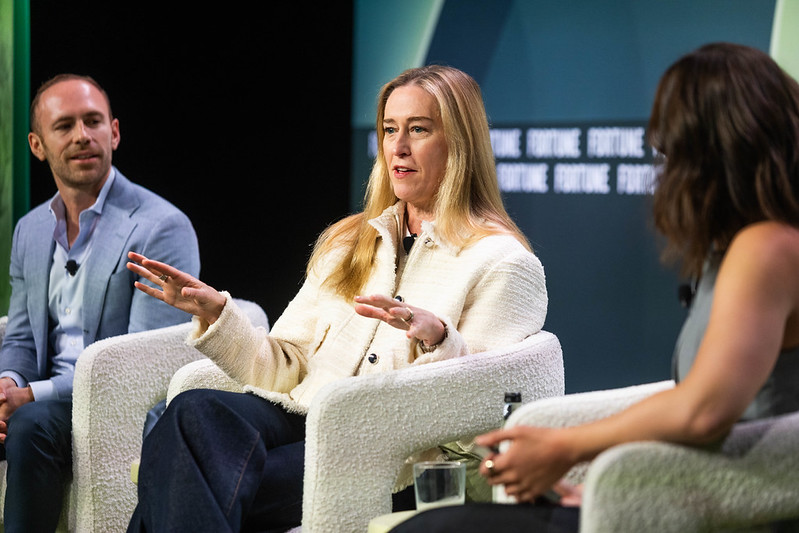
Coulson says that one of the greatest opportunities for transformation may actually lie in whether leaders can transform themselves. To realize the promise of business transformation at scale, she suggests that organizations must also take a hard look at how decisions are made, how teams collaborate, and how leaders empower employees to move quickly.
Coulson goes on to write that while most attention has been focused on AI’s capabilities, its adoption still ultimately depends on people. Employees need confidence that new technologies will support their work. Leaders need confidence in the data and systems that power decision-making. And organizations need a clear vision for how AI aligns with broader business objectives.
The most successful organizations will be those that pair innovation with operational discipline, ensuring that people, processes, and technology evolve together. AI may provide the tools to move faster, but leaders remain responsible for creating the conditions that allow those tools to deliver meaningful impact.
Read Adrienne’s insights in the Fortune article, "Workers Are Becoming Superhuman With AI—But Their Leaders Can't Keep Up."
